
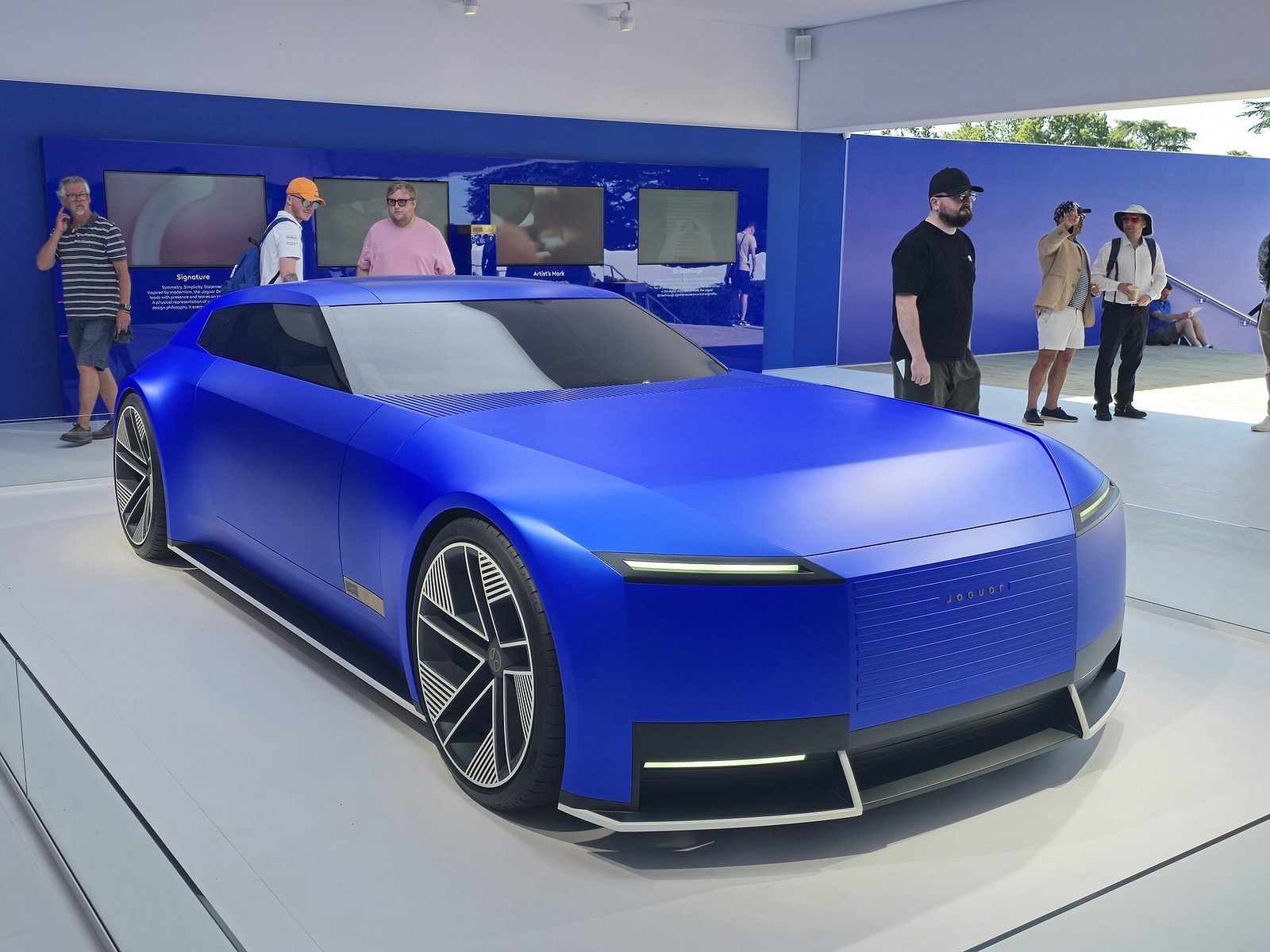
- Jaguar’s first all-electric production car delivers 1,015 hp from a tri-motor setup, with 350 kW DC fast charging on an 850V architecture.
- Revealed in New York on October 6, the 5.2-metre four-door GT will start at about $130,500, with order books opening in early 2027.
- The launch completes Jaguar’s reset as an all-electric brand following the end of combustion car production in early 2025.
The Jaguar Type 01 has arrived, and with it the most radical reinvention in the British brand’s 90-year history. Unveiled on October 6 at STORIED NYC in West Chelsea — with Florence Pugh among the attendees — the four-door grand tourer is the first production car built on Jaguar’s bespoke Electric Architecture (JEA), and the first production Jaguar of any kind since the company ended combustion-car production in early 2025. Previewed by the dramatic Type 00 concept in 2024, the Type 01 is not a cautious transition. It is a deliberate jump straight into territory once occupied by Bentley and Aston Martin.
That positioning shows in the specification sheet. A tri-motor all-wheel-drive system produces 1,015 hp and 1,365 Nm of torque, making the Type 01 the most powerful Jaguar ever built. Jaguar claims 0–62 mph in 3.2 seconds and a 150 mph top speed — numbers that put the newcomer firmly among the fastest grand tourers on sale, electric or otherwise. For a brand whose electric history amounts to a single model, the I-Pace, this is an unmistakable statement of intent.
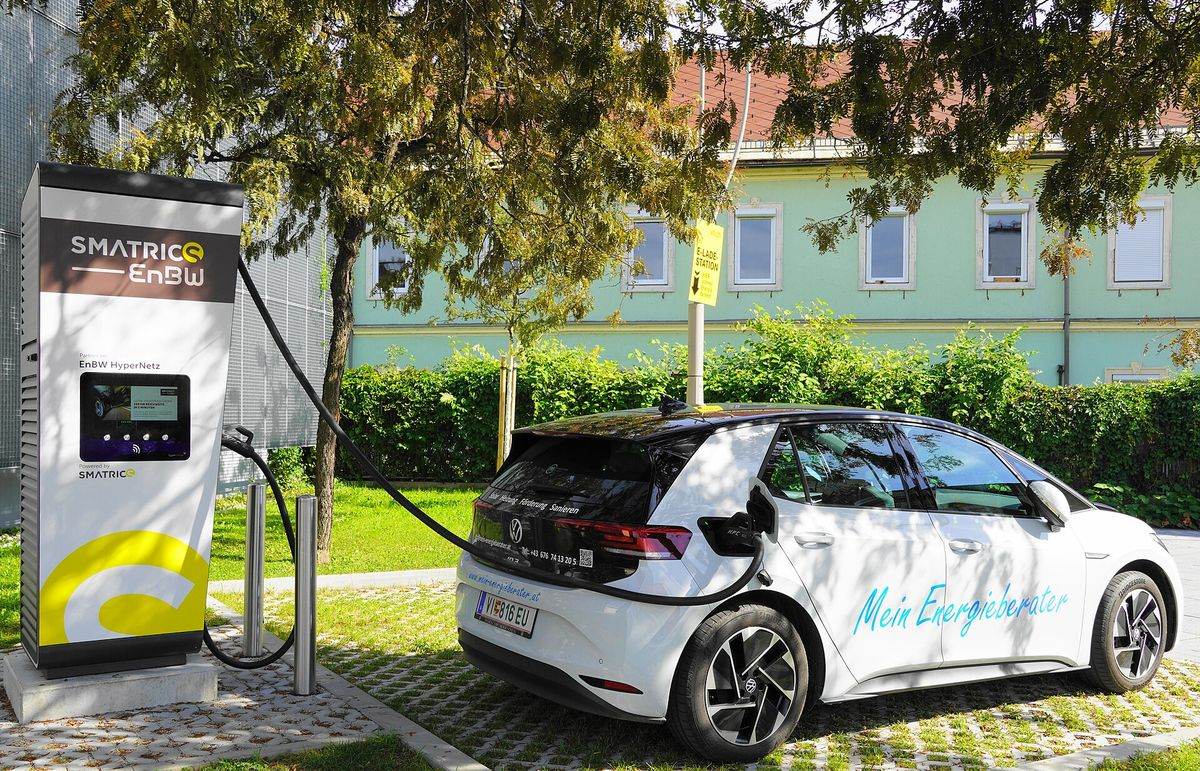
The battery is a lithium-nickel-manganese-cobalt (NMC) prismatic pack rated between 118 and 120 kWh, though Jaguar notes final capacity is still being homologated. The 850V electrical architecture supports 350 kW DC fast charging, good for a 10–80% charge in 22 minutes, and Jaguar says 13 minutes on the plug adds roughly 200 miles of range. Range figures themselves require careful reading: Jaguar targets about 400 miles on the EPA cycle, with outlets citing up to 435 miles against the WLTP standard. The spread reflects the difference between test protocols rather than any contradiction, and buyers should wait for final homologated figures before comparing against rivals.
Jaguar Type 01 specs and price: what the reveal tells us
The Type 01’s body is as much a break from convention as its drivetrain. At 5.2 metres long, the four-door 2+2 GT has no rear window at all — rearward visibility comes from a camera-based ClearSight display. A drag coefficient of 0.23 is remarkably low for a car of this size and helps explain how Jaguar expects to reach those range targets despite the car’s size and 1,015-hp output. Efficiency, in other words, is doing real work beneath the styling.
Jaguar’s engineers have also solved one of the classic problems of the electric GT: the tall floor. Segmented battery packaging shaved 200 mm off the battery’s height, allowing a roofline of just 1.4 metres. The result is a silhouette that sits low in the way a grand tourer should, rather than the loftier proportions of an SUV-derived platform. It is a quiet but meaningful engineering win — packaging, not chemistry, is what lets an EV look like a proper GT.
On price, Jaguar is asking £130,000 in the UK and roughly $130,500 in the United States. Order books open in early 2027, with first deliveries expected in summer 2027 (Jaguar also cites the second half of 2027 for some markets). Production will be at Solihull in the UK, and an Australian launch has been confirmed at roughly $300,000 before on-road costs. That pricing roughly doubles the entry point of Jaguar’s old lineup — a deliberate move upmarket that the company frames as a return to its luxury roots.
Why the Jaguar Type 01 is a make-or-break reset
Context matters here. In early 2025, Jaguar did something no major manufacturer had done: it stopped building new cars entirely, letting its combustion lineup die while it prepared for an electric-only future. It was either a bold piece of sequencing or a year-long revenue drought, depending on your view. The Type 01 is the payoff — the car that has to prove the gamble worked.
The strategy is clear enough. Rather than fighting Tesla, Mercedes and BMW in the mass premium segment, Jaguar has moved upmarket to chase Bentley money with a lower-volume, higher-margin flagship. The 1,015-hp figure grabs headlines, but the business logic is what matters: a car that commands £130,000-plus needs fewer sales to keep the brand viable, and a distinctive design language — the windowless rear, the slab proportions inherited from the Type 00 concept — gives Jaguar something its rivals cannot copy cheaply.
There are risks in plain sight. Electric demand in the ultra-luxury segment is unproven, and Jaguar is asking buyers to spend Bentley money on a car from a brand with one discontinued EV to its name. Charging infrastructure expectations at this price point are demanding, even with 350 kW capability, and the final EPA range figure will matter enormously to how the car is received in the US market. Jaguar’s bet is that design, power and exclusivity outweigh those doubts. The Jaguar electric GT New York reveal was deliberately staged in West Chelsea rather than at a motor show — a culture venue, not a car venue — a bet the European EV market, where EV sales hit record levels in 2026, suggests there is appetite to reward.
What’s next for Jaguar’s electric era
The Type 01 is the first of what Jaguar says will be a three-car electric range, with a large SUV and a big saloon to follow on the same JEA platform. How quickly those arrive will depend heavily on the GT’s reception — order books opening in early 2027 give the company a few months to convert reveal excitement into deposits, but the real test is sustained demand once the novelty fades.
Watch three things. First, final homologated range and pricing, which will determine whether the Type 01 is judged as a technological flagship or an expensive curiosity. Second, whether the JEA platform’s NMC prismatic battery chemistry — a mainstream choice explained in our guide to battery chemistries — keeps pace as sodium-ion and solid-state chemistries move toward production. And third, whether Jaguar’s audience follows it upmarket. The brand has effectively fired its old customer base; the Type 01 has to assemble a new one. That is a harder job than building 1,015 horsepower.
Reporting on the reveal: Carscoops’ first look at the Type 01, Auto Express on Jaguar’s luxury EV future, and ackodrive on the brand’s most powerful car yet.