
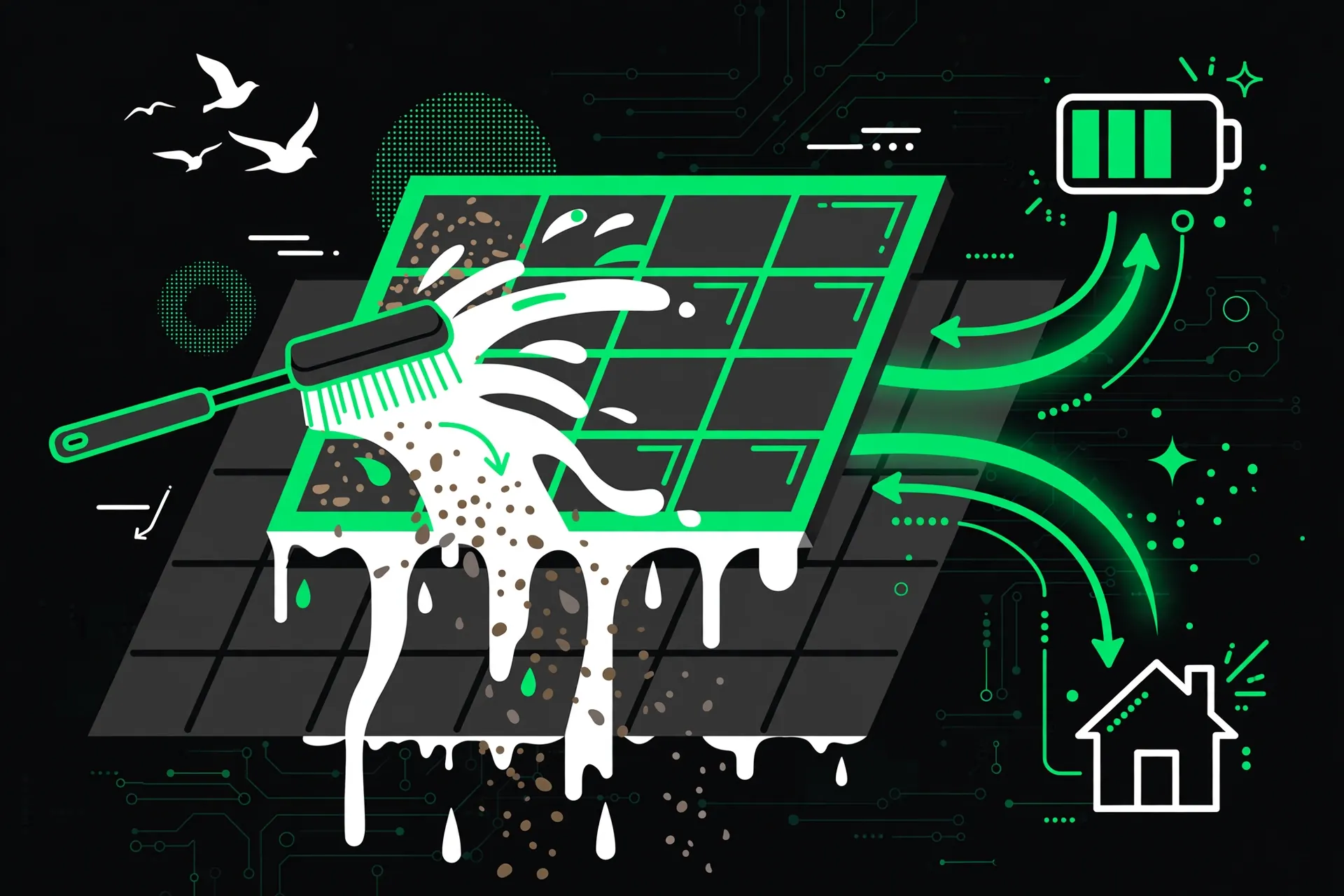
- For most tilted, rain-washed rooftop systems, the answer to “do solar panels need cleaning” is: rarely, and only when a specific problem is visible.
- Trina Solar’s installation manual states that rainwater normally suffices, with more regular cleaning needed below 10 degrees of tilt or in dusty, polluted, or bird-heavy locations.
- When cleaning is warranted, use a soft brush or cloth with mild soap and water near panel temperature, and never step on a module.
Solar panel soiling: the build-up of dust, pollen, bird droppings, leaves, and pollution on a panel’s glass surface, which blocks sunlight from reaching the solar cells and reduces electricity output until the surface is cleaned, with the loss growing as the layer thickens over weeks or months without rain.
If you own rooftop solar, you have probably asked whether you need to clean your panels, and how often. The short answer to “do solar panels need cleaning” is that most systems need far less cleaning than cleaning companies suggest. Tilt, rainfall, and what lands on the glass matter more than any fixed schedule: check occasionally, and wash only when output or inspection shows a real problem.
That conclusion rests on manufacturer guidance, not just owner habit. Trina Solar’s installation manual states that rainwater is normally sufficient to keep modules clean, while modules installed below 10 degrees of tilt, or in dusty areas, in landscape orientation, in high-pollution areas, or close to large bird populations will require more regular cleaning. The manual advises a soft cloth, mild detergent, and clean water, and warns against thermal shock from water at a very different temperature from the modules. Owners in the DIY Solar Power Forum thread on keeping panels clean report a wide spread of practice, from never cleaning a steeply pitched ten-year-old array to hosing down ground-mounted panels in dry climates, and several report no detectable output gain after washing ordinary dust off tilted panels.
Do solar panels need cleaning? The short answer by roof type
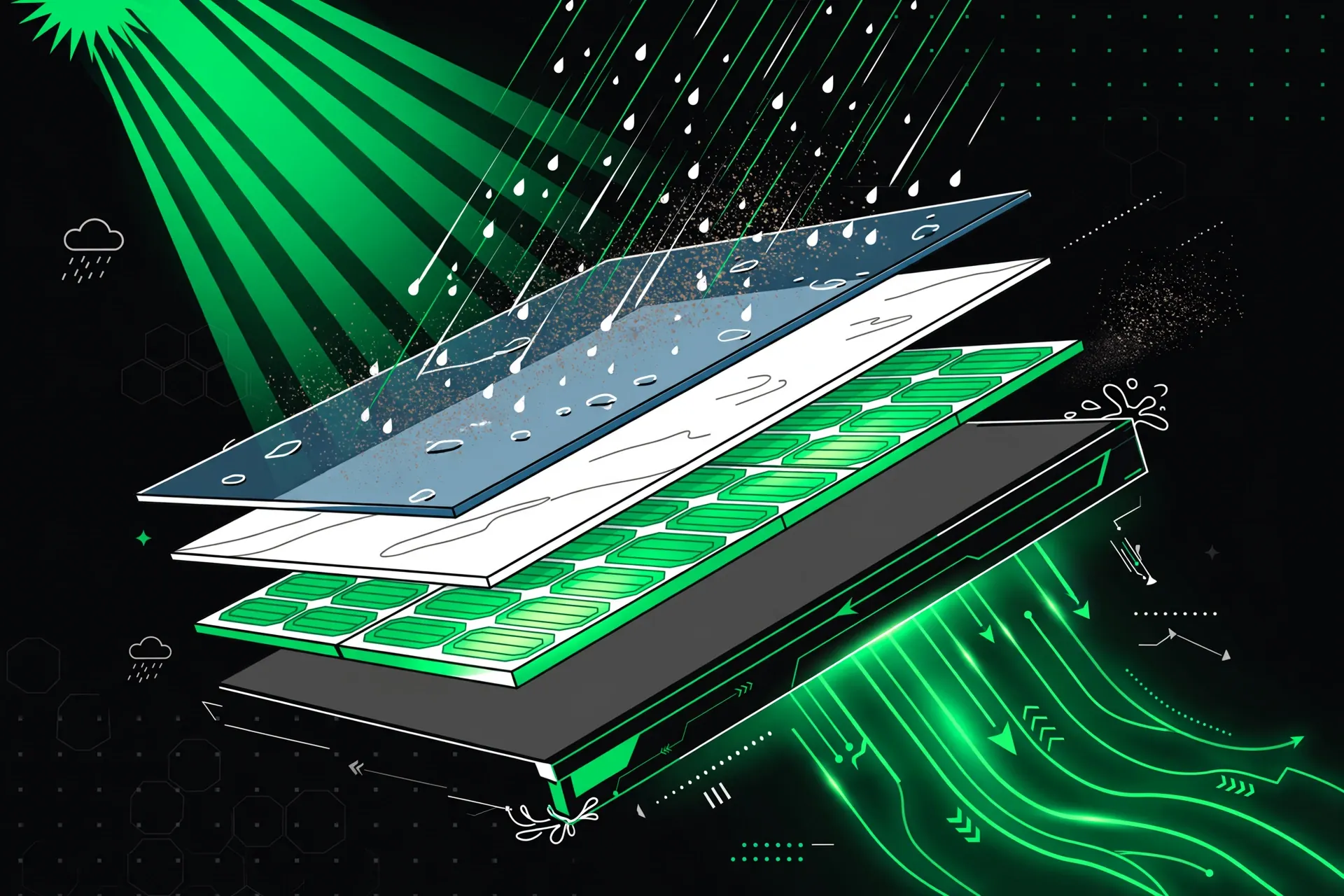
The deciding factor is whether dirt stays put. Rain runs off a tilted panel and carries loose dust with it, while a flat panel lets water pool behind the frame lip and leaves dust behind when it dries. That is why the Trina manual draws its line at 10 degrees: modules mounted flat, at 0 degrees, do not self-clean as effectively as modules at 10 degrees or more. Location adds a second layer: dust in arid regions, pollen in spring, soot near industry, and salt near the coast all accumulate faster than ordinary suburban grime. One forum contributor in South Florida described fine grit blown across from the Sahara and aggressive seagull droppings.
How often to clean solar panels: a practical schedule
For most homeowners, the question of how often to clean solar panels resolves to a check every 6 to 12 months and a wash only when the check finds something. Nerd Solar’s DIY cleaning guide gives the same 6 to 12 month range for most homes, with more frequent cleaning in dusty or desert-like areas. Treat that as an inspection interval, not a washing mandate.
| Situation | Tilt and soiling source | Recommended interval | What to do |
|---|---|---|---|
| Steep roof, rainy climate | 20 degrees or more, light dust | Inspect yearly; wash rarely | Check from the ground; wash only if output drops |
| Typical suburban roof | 15 to 30 degrees, pollen, light dust | Inspect every 6 to 12 months | Wash in spring if a film remains after rain |
| Flat or low-tilt roof | Below 10 degrees, dust at frame edge | Inspect every 3 to 6 months | Clear the lower frame edge; wash if residue persists |
| Dusty, arid, or coastal site | Any tilt, heavy dust or salt | Inspect every 3 months | Wash when a layer survives rain; repeat after dust storms |
| Bird-heavy site | Any tilt, droppings on cells | Inspect monthly in nesting season | Spot-clean promptly; fix the perch if it repeats |
Trina’s manual also offers a decision test for owners who can read a string-level current from their inverter. Record a heavily soiled string’s feed-in current under steady clear-sky sun, clean it, and measure again. If the gain is under 5 percent, the manual says it is normally not worth spending money on cleaning.
What solar panel soiling loss really costs
Solar panel soiling loss varies far more by place than most marketing suggests. Research from the US National Renewable Energy Laboratory (NREL) on five utility-scale plants in North Carolina found that spring pollen cut performance by about 15 percent during peak pollen season, and that annual production losses were on the order of 10 percent without planned cleaning. Rain removed some pollen but did not return performance to full output, and a mechanical wet-brush clean lifted performance by 5 to 11 percent. Those are utility plants in a pollen-heavy region, not a typical suburban roof, yet they show why a visible seasonal film deserves attention while ordinary dust often does not.
What a 10 percent pollen-season loss is worth in kilowatt-hours and dollars
To make those percentages concrete, here is a worked calculation for a typical home system. Take an 8 kilowatt rooftop array in a sunny US region producing about 1,500 kilowatt-hours per installed kilowatt each year, or 12,000 kilowatt-hours a year in total. Value the electricity at 17 cents per kilowatt-hour, a stated assumption for this example, not a quoted tariff. At a 2 percent soiling loss, the system gives up 240 kilowatt-hours a year, worth about 41 dollars. At the NREL pollen study’s 10 percent annual figure without planned cleaning, the loss is 1,200 kilowatt-hours, worth about 204 dollars. At the study’s 5 to 11 percent cleaning recovery range, one effective clean in that pollen-heavy setting recovers roughly 600 to 1,320 kilowatt-hours a year, worth about 102 to 224 dollars.
Read those outcomes against the cost of acting. A do-it-yourself wash costs little more than a soft brush, mild soap, and your time, so even the 2 percent case can justify a careful DIY clean if the roof is safely accessible. A paid professional clean only pays for itself when the recoverable loss is large, so measure first, or at least confirm a visible problem, before paying to wash a panel that rain already keeps clean.
How to clean solar panels DIY without damaging them
When a wash is justified, keep it gentle. The Trina method is a soft cloth or soft-bristled brush with mild detergent and clean water, plus a squeegee and a final rinse to avoid soap residue. Work in the early morning or late afternoon when panels are cooler, and use water close to panel temperature, since cold water on a hot panel risks thermal shock. Never step on a panel: your weight can crack cells or damage the laminate, and Trina’s manual states that modules must not bear extra force.
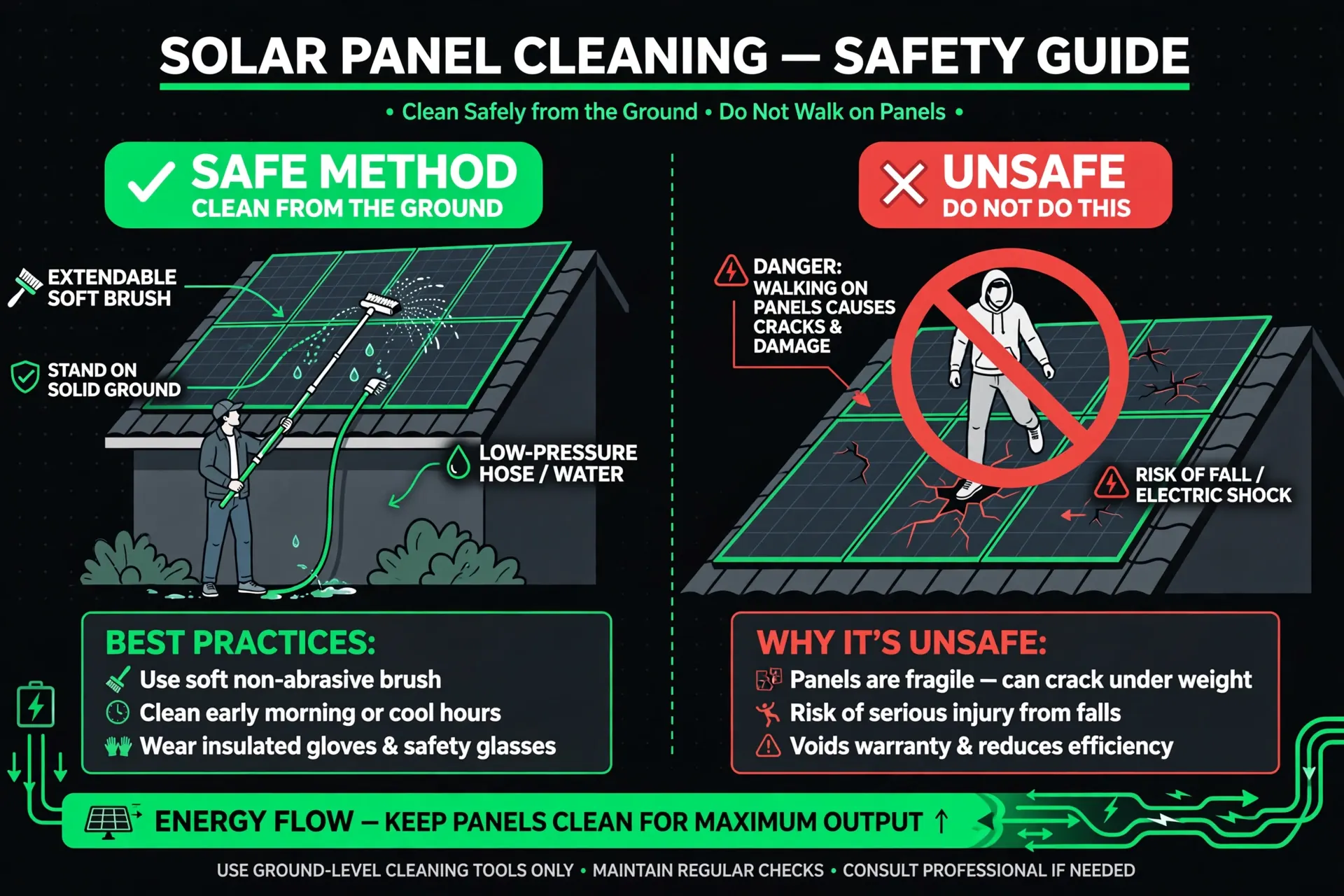
Avoid pressure washers, abrasive pads, and harsh chemicals. Forum owners warn against coatings such as car wax and water repellents, which can interfere with the panel surface and trap dirt as they break down under ultraviolet light. Tap water in a hard-water area leaves mineral spots as it dries; distilled or rainwater avoids that residue. Skip the back of the panel, which does not need cleaning, and keep water away from connectors and junction boxes. If the roof is steep, high, or slippery, hire a professional rather than improvising with a ladder.
Bird droppings on solar panels: a special case
Bird droppings on solar panels deserve faster action than general dust. A dropping is opaque and concentrated, so it shades the cells underneath it completely, and a shaded cell in a series string can drag down the output of its neighbours. Droppings also harden and stick, so rain often fails to remove them while it washes dust away. The fix is local: soften the dropping with water, wipe gently with a soft cloth, and rinse. If droppings keep appearing on the same panels, fix the cause, such as a perch or an overhanging tree, rather than cleaning the same spot repeatedly. See also how many solar panels you actually need and adding a home battery to an existing solar system.
Frequently asked questions
How often should solar panels be cleaned?
Inspect every 6 to 12 months and wash only when inspection or output shows a problem. Clean more often, every 3 to 6 months, if the tilt is below 10 degrees, the site is dusty or coastal, or birds foul the panels regularly.
Can you use alcohol to clean solar panels?
Do not use industrial alcohol or strong solvents. Canadian Solar’s installation manual for its standard modules prohibits cleaning solutions containing hydrofluoric acid, alkali, acetone, or industrial alcohol. Water with a small amount of mild detergent is the safe choice.
Does rain clean solar panels?
Rain handles loose dust well on tilted panels, which is why Trina’s manual says rainwater is normally sufficient. Rain does not reliably remove sticky pollen films, hardened bird droppings, or grime pooled at the frame edge of a flat panel.
Is bird droppings on solar panels a problem?
Yes, more than an equal area of dust. A dropping blocks light completely from the cells it covers, and a shaded cell can reduce the output of its string. Spot-clean droppings promptly with water and a soft cloth.
What should you never do when cleaning solar panels?
Never step on a panel, never use a pressure washer or abrasive pad, and never pour cold water over a hot panel. Avoid waxes, water repellents, and strong solvents. If the roof is steep or the array is hard to reach, hire a professional.